



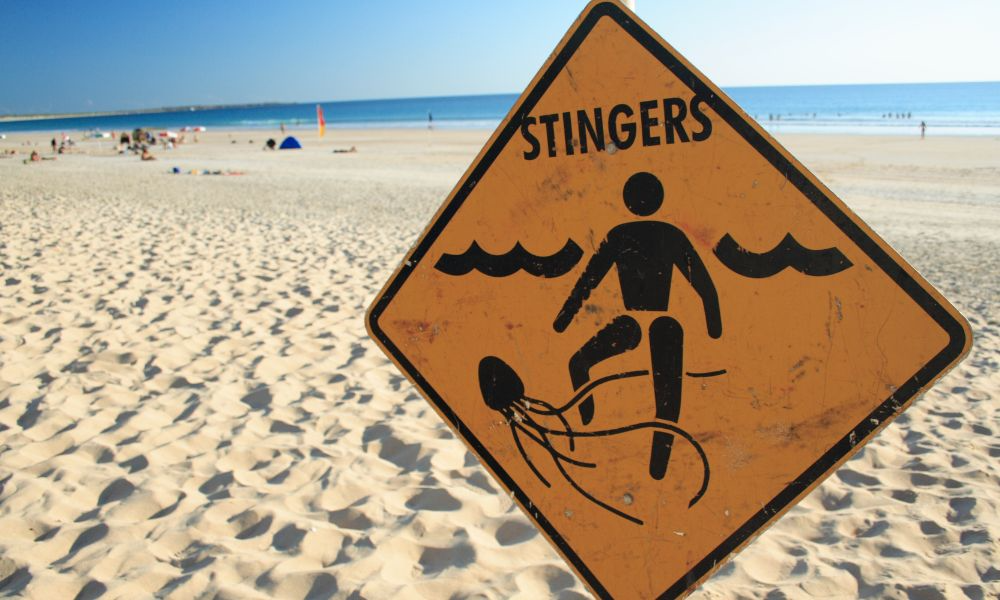
Stinger season in the Whitsundays runs from late October through to May.
This is when the warm, still waters provide the perfect conditions for marine stingers like box jellyfish and Irukandji, whose venom is potentially deadly for swimmers.
Anyone planning a trip to the Whitsundays will want to know when stingers are prevalent and how it might impact their holiday. The spring, and summer months in particular, are the peak period when you are most likely to encounter a stinger. But while I might say ‘most likely’ in reality it’s very unlikely to occur at all. However, the potential harm is so high that it’s wise to take precautions not only during the stinger season, but year-round.
What are stingers & are they dangerous?
Stingers are venomous marine creatures, predominantly jellyfish, that use toxins to paralyse or kill their prey.
The venom is delivered through microscopic stinging cells called nematocysts, found on the tentacles or bodies of these marine animals. They pose varying levels of danger to humans, from simply causing a burning sensation on the site of contact, to being deadly, with a fatality occurring every few years in Australian waters.
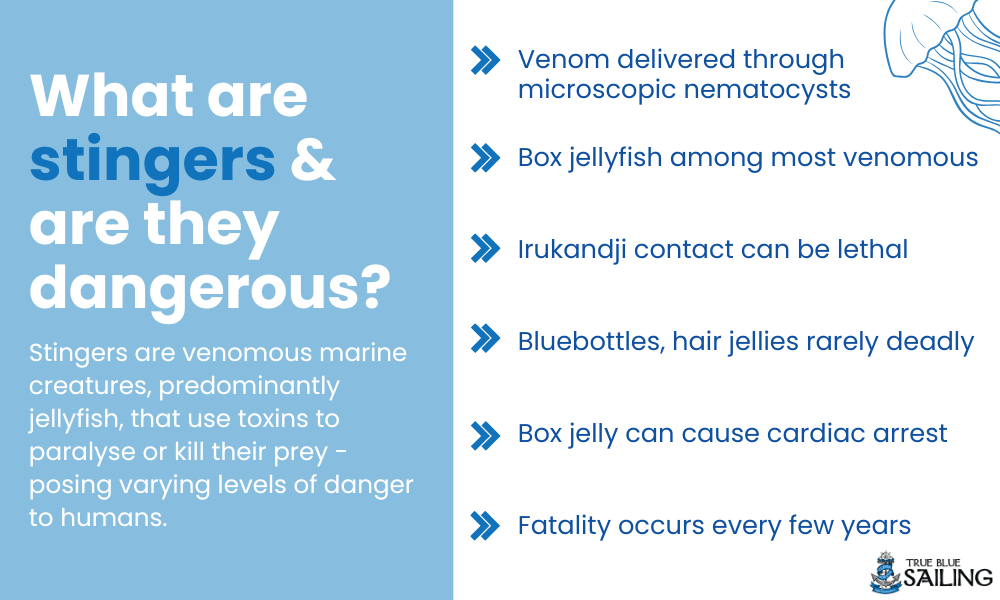
Stingers include box jellyfish, Irukandji, bluebottles and hair jellies. The latter two, Bluebottles (Physalia) and Hair Jellies (Cyanea) are encountered across much of Australia’s marine waterways and while capable of causing significant pain or discomfort, are rarely life threatening. Box Jellyfish (Chironex fleckeri) and Irukanji are found exclusively in the tropics and sub-tropics, and contact with their tentacles can be lethal. In fact, box jellyfish are amongst the most venomous animals on the planet and can cause cardiac arrest in minutes.
What happens if you get stung?
If you’re stung by one of the more lethal marine stingers, namely the box jellyfish or irukandji, you can expect to experience quite painful and potentially lethal symptoms.
Box Jellyfish stings cause immediate severe pain, with the rapid onset of sweating, rashes, cramps, nausea or even vomiting, and very high blood pressure. The initial symptoms can be debilitating, but a severe sting may progress into life-threatening issues such as irregular heartbeats, breathing difficulties and cardiac arrest.
Irukandji stings start mildly but over the course of 20 to 30 minutes can progress into severe, full-body pain (Particularly the back, chest and stomach), as well as nausea, and rapidly increasing blood pressure. This spike in blood pressure can lead to cardiac arrest.
When is peak season for stingers on the Whitsundays?
Peak season for stingers in the Whitsundays is late October to May, with the greatest risk of encountering one being in the wet season months of November to March.
This coincides with higher humidity, warmer ocean temperatures and calmer seas. While this is the period when they are more prevalent in the sub-tropical waters of the Whitsundays, the chances of you being stung are very low.
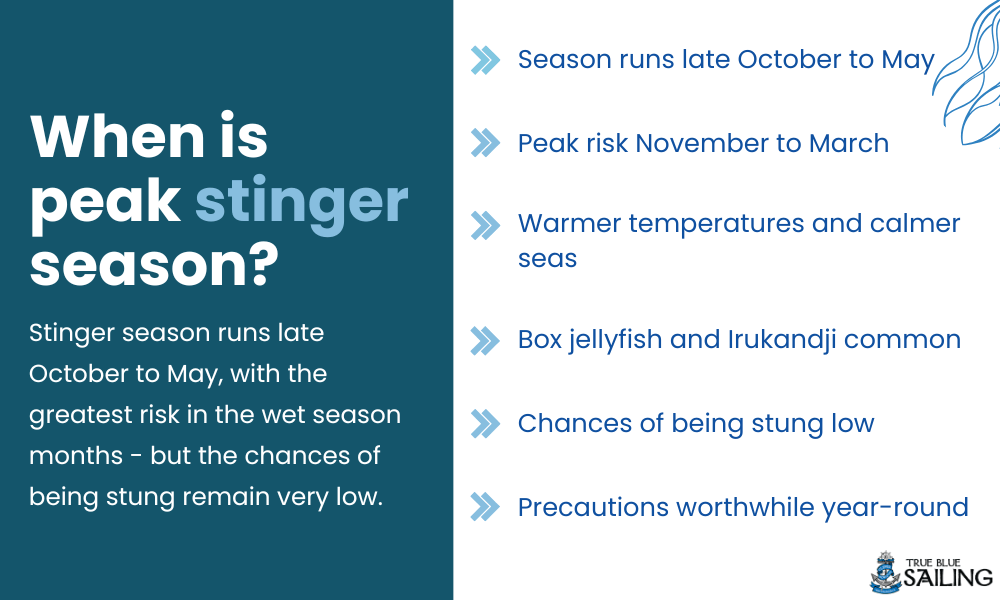
The fact that stingers are found in greater numbers at this time doesn’t mean you shouldn’t travel to the Whitsundays during the warmer months. Plenty of people still take advantage of the beautiful waters and incredible experiences the area has to offer, even if it’s considered peak stinger season. They simply follow the safety precautions with a little more vigour, always wearing stinger suits and listening to local advice about where to swim and when.
What are the most common types of stingers on the Whitsundays?
The most common types of stingers in the Whitsundays are Irukandji and box jellyfish.
But the term common doesn’t mean they’re present in such numbers that you’re likely to see one. On the contrary, the chances of a stinger encounter with one of these potentially deadly critters is very low.
The aptly-named Box Jellyfish (Chironex fleckeri) gets its label from its pale blue, or sometimes translucent cube or bell-shaped body that can grow to 30cm or more across. They have long, trailing tentacles that hang in clusters from the four corners of their body. These tentacles can be several metres in length with up to 15 of them on each corner. Box jellyfish can be very hard to see in the water, and because their tentacles are so long you can be stung by them and never see the culprit.
Compared to box jellyfish, Irukandji are very small, only around 1 to 2cm across. They are completely translucent, making them extremely difficult to see in the water. Their tiny bodies are similar in shape to a box jellyfish, however they only have one, very thin tentacle on each corner of their bell. Another distinction between these two types of deadly jellyfish is that Irukandji tentacles are retractable and can appear quite small. However, they can extend up to a metre in length.
Precautions to take during stinger season
The best precaution to take during stinger season is to wear a stinger suit.
These are full-body lycra or neoprene wetsuits that cover the majority of your skin. They provide a physical barrier to stingers while also offering sun protection.
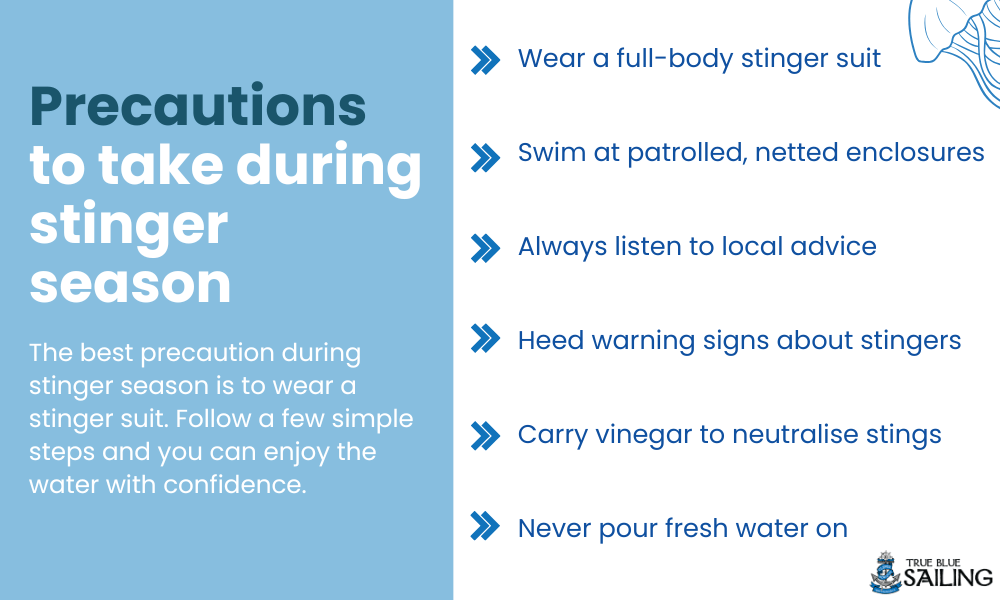
Swimming at patrolled and ideally netted swimming enclosures is also advisable. Apart from reducing the risk of stinger encounters, it also provides greater safety from crocodiles, while also meaning there’s a lifeguard keeping an eye on you.
Always listen to local advice, particularly from tour guides and lifeguards, as they will know the current conditions. Plus take heed of any signs that might provide warnings about stingers in the area.
Lastly, carry a bottle of vinegar with you if you plan on swimming. By immediately pouring vinegar over the site of a sting, you can neutralise the stinging cells and significantly reduce the symptoms. Never pour fresh water over the area because this triggers the stinging cells to rupture and release their venom all at once. This creates a massive secondary dose of venom, increasing the pain and toxicity of the sting.
Final Thoughts
As much as you might read about the risks of stingers on the Whitsundays, particularly during the peak stinger season of November to March, the probability of being stung is very low. If you employ our advice and take a few precautions, you’ll be able to enjoy a stress-free holiday in paradise, without the fear of stingers.